

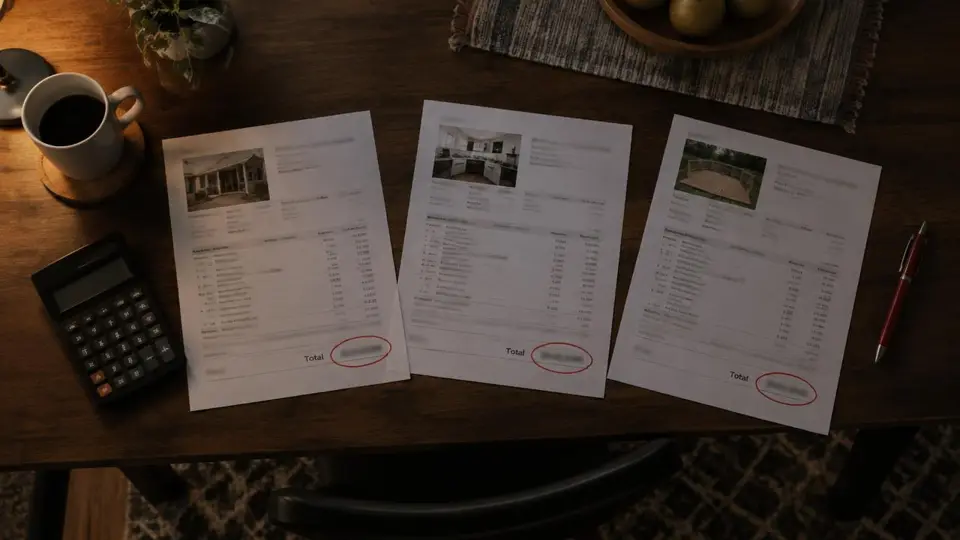
Three estimates out. Two go quiet. The third asks for a lower price.
The price was fine. The homeowner never saw what she was buying.
Here is the part most contractors will not like. When a homeowner asks you to cut your price, she is not telling you the price is too high. She is telling you that you did not sell the job. A discount is not a negotiation tactic. It is a confession.
That sounds harsh. The numbers back it up.
You are never the only quote
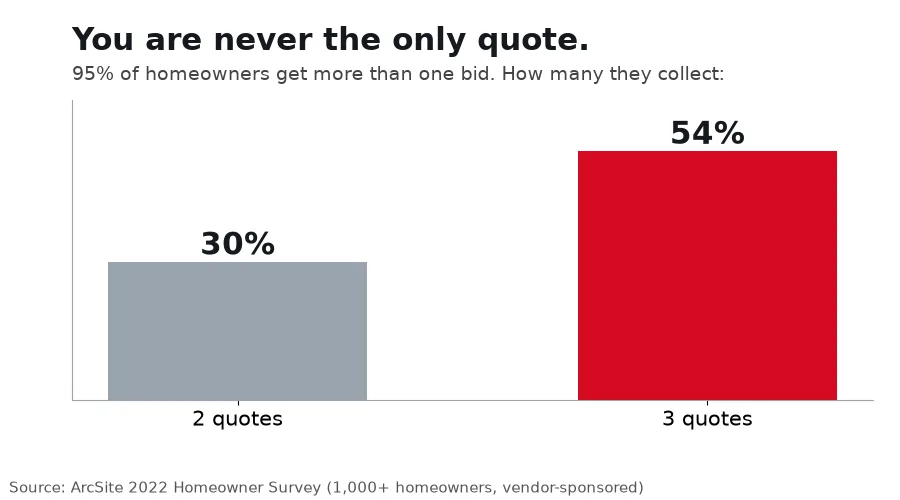
In a survey of more than 1,000 homeowners, 95% said they get more than one bid before they decide. More than half collect three. Roofing homeowners say the same thing: about two in three plan to gather three quotes before they pick a roofer.
So assume she has three PDFs open on the kitchen table tonight. If all three look like a list of materials with a total at the bottom, she will do the only thing that makes sense. She will compare the totals.
When a homeowner has no picture of the finished work, price is the only thing left to compare. So she compares price.
Price is not why she hires you
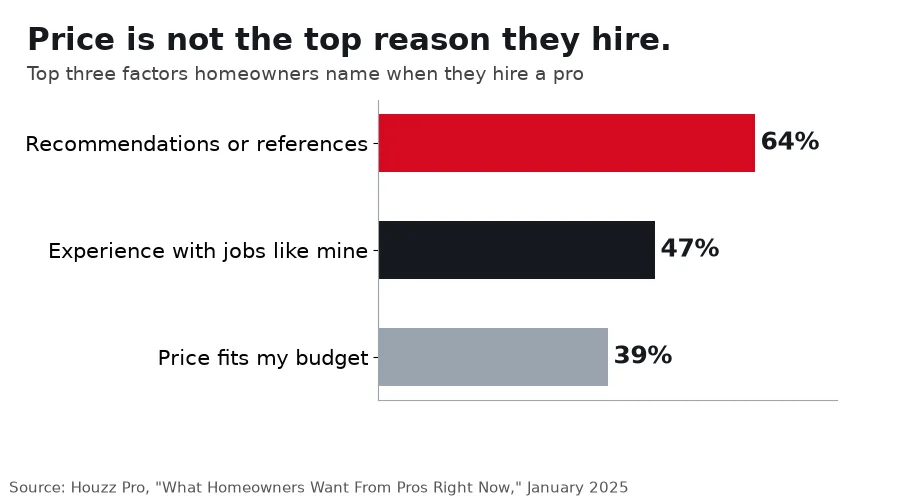
Houzz asked homeowners for the top three things that decide who they hire. Recommendations and references came first at 64%. Experience with jobs like theirs came next at 47%. A price that fits the budget came in at 39%.
Read that again. Most homeowners do not hire on price. They hire on trust and proof. They only fall back on price when you give them nothing else to go on.
The same survey found the top worry while planning a project is trusting the pro, at 25%. Right behind it: getting clear, timely answers (21%) and getting an estimate with enough detail (20%). Every one of those is something you control in the driveway.
The habits that are costing you jobs
Be honest about which of these you do.
- The drive-by estimate. Fifteen minutes on the property, a tape measure, and an "I will get you a number." She learned nothing about her house, so the number is all she has.
- The tomorrow quote. You type it up that night and send it the next day. By then the feeling you built is gone. 28% of homeowners expect the quote the same day as the visit.
- The PDF that looks like the other two. Line items, a total, a signature box. Nothing that shows her house finished.
- The panic discount. She pushes back, you knock off 10%. You just taught her your first price was not real, and you gave away profit you earned.
- The "call me if you have questions." She will not call. She will open the next quote.
Build value while you stand there
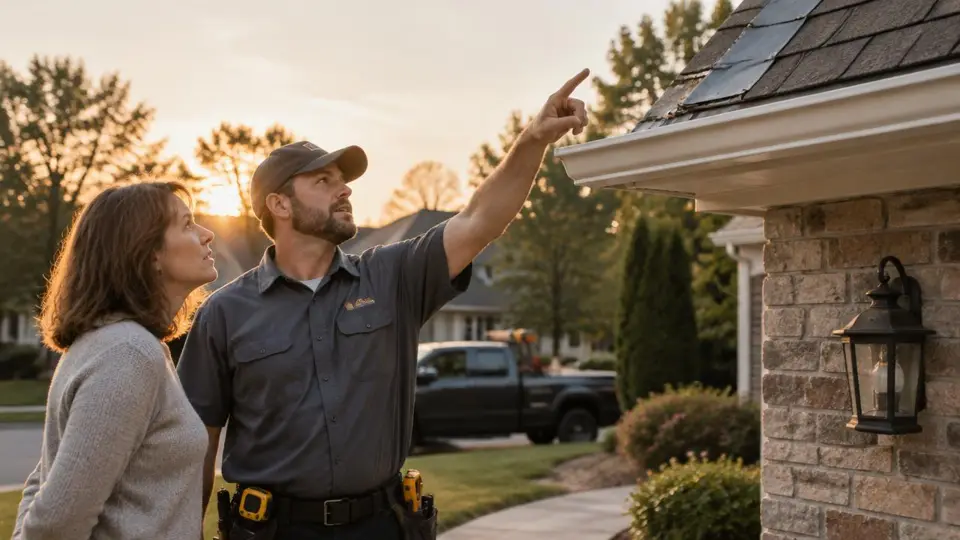
The hour at the property matters more than everything after. What she watches you notice matters more than anything you say.
Walk the property beside her. Point at the exact spot. "This flashing here is where the water is getting in" lands harder than "you have some flashing issues." Name the problem she noticed months ago and never knew how to explain. Now you are the contractor who finally told her what was wrong with her house, and the other two are guys with clipboards.
That is the trust and the proof that 64% of homeowners say they hire on. You are building it in real time, in front of her.
Speed is a weapon. Most contractors leave it in the truck.
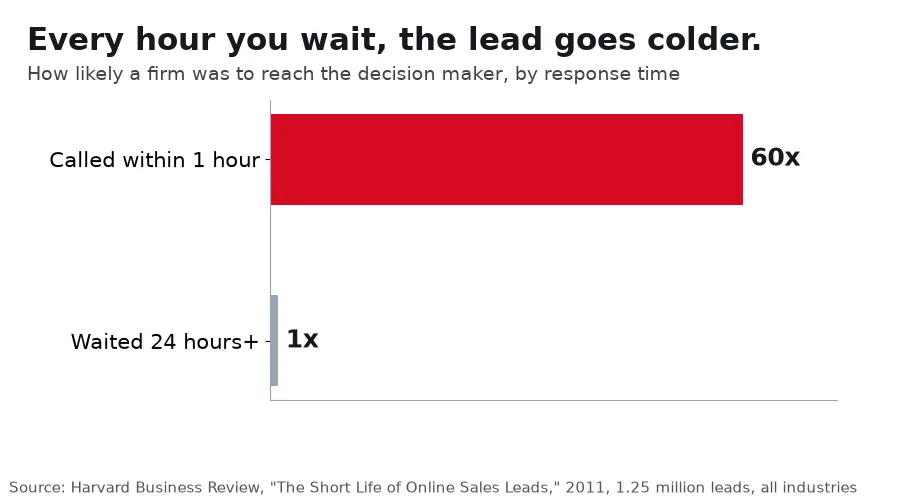
Harvard Business Review studied 1.25 million sales leads. Firms that reached out within an hour were nearly 7 times as likely to have a real conversation with the decision maker as firms that waited even one hour longer, and more than 60 times as likely as firms that waited a day or more. The average firm took 42 hours to respond.
That study was not about contractors, and a real conversation is not a signed job. But the lesson travels. Interest fades by the hour. The best time to ask for the job is while you are still standing in her driveway.
Let her see the finished job
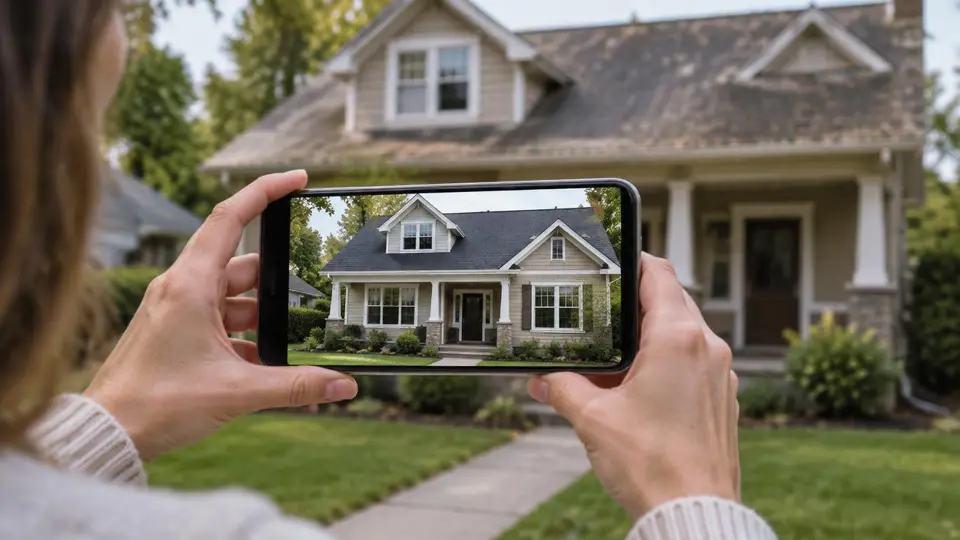
This is what the Photo AI Redesign Studio is for.
Take a photo on your phone while you stand in front of the work. Choose the look. Inside a minute, she holds your phone and sees her own house, finished.
Watch the conversation change. The questions stop being about whether to do the work. They turn to which color, and whether the trim should match. She has already bought the job in her head. What is left is detail, and detail is a far better place to talk about money than doubt.
Is there proof that showing the finished job helps you win? Some. Hover reported that one exterior contractor, a family business doing more than $20 million a year, won jobs 2.6 times as often when a 3D model of the house was opened before or during the appointment. That is one company and one vendor telling the story, so treat it as a strong hint, not a law.
And to be fair: when Houzz asked homeowners what was hard about planning, only 12% named trouble picturing the result. Most homeowners will not tell you they cannot see it. They will just tell you your price is high.
The picture keeps working after you drive away. The family sees it at dinner. A sister or a neighbor sees it by the weekend. Your estimate sits attached to a picture of their own house, looking the way they always wanted, while the other two quotes sit in an inbox as plain PDFs.
Make saying yes take ten seconds
Here is where good contractors lose jobs they already won.
She wants the work. You leave. You write up the estimate that evening and send it the next morning. By then she has three quotes and no picture of what any of them mean. The feeling you built in her driveway is gone, and all three numbers look the same again.
So leave with the estimate written. Build the estimate on site, attach the redesign, and send both before you pull out. She opens the estimate on her phone, sees the picture she held a minute ago, signs with her finger, and pays the deposit on the same screen.
Signing on a screen is fast when you let it be. Docusign reports that 44% of agreements signed electronically are finished in 15 minutes or less, and 79% in under a day. Those are their numbers across all kinds of agreements, not just contractor jobs, but the point holds: the fewer steps between yes and signed, the fewer jobs slip away.
No printing. No chasing. No "I'll send the quote over tonight."
What the best shops do differently
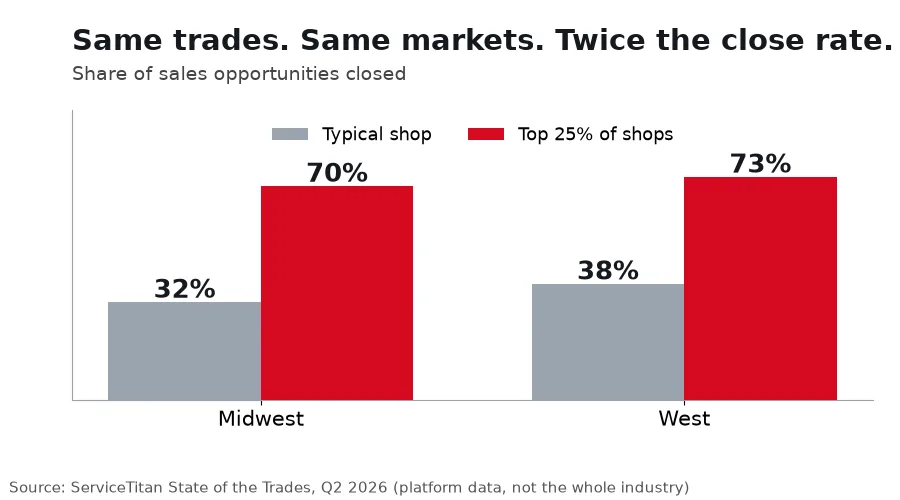
ServiceTitan tracks close rates across the shops on its platform. In the Midwest, the typical shop closes 32% of its sales chances. The top quarter closes 70%. In the West it is 38% against 73%. Same trades, same markets, roughly double the wins.
Those top shops are not cheaper. Nobody wins twice as often by being the lowest bid twice as often. They win by showing up with proof, answering fast, and making it easy to say yes. That is a choice you can make on your next appointment.
What this comes down to
Price objections are almost never about price. They come from doubt about whether the work is worth the money.
A homeowner who sees the finished work, watches you understand the problem, and says yes in ten seconds does not shop you around. She hires you.
Stop cutting your price to fix a selling problem. Build the value first. The number takes care of the rest.
See CT1 on a real job. Book a demo.
Sources
- ArcSite, 2022 Homeowner Survey Report (vendor-sponsored)
- Roofing Contractor, Homeowner survey, February 2024
- Houzz Pro, What Homeowners Want From Pros Right Now, January 2025
- Harvard Business Review, The Short Life of Online Sales Leads, March 2011
- Hover, Selling More Jobs with Hover, August 2021 (vendor case study)
- Docusign, How to Get the Most Out of Docusign eSignature, August 2023 (vendor)
- ServiceTitan, State of the Trades, Q2 2026 (platform data)